When an online retail platform expands across multiple warehouses and multi-channel fulfillment pipelines, technical boundaries often dissolve unnoticed. At this enterprise commerce operator, a centralized checkout service gradually absorbed complex inventory reservation rules, promotion edge cases, and direct supplier communication protocols. This structural sprawl created cross-team delivery bottlenecks and turned minor promotions into high-risk production deployments.
Direct database queries and synchronous REST calls between the shopping cart, fulfillment engine, and pricing services generated widespread coupling. Whenever marketing requested custom bundling rules, both the warehouse team and the checkout squad had to deploy simultaneously. Our architectural audit mapped nineteen circular dependencies, proving that the system was operating as a distributed monolith rather than an autonomous domain ecosystem.
Engage our lead architecture team for a dedicated boundary audit, domain decoupling strategy, and cross-team interface definition.
System boundaries must reflect explicit organizational decision rights. If two separate product teams cannot deploy changes independently without scheduled joint verification windows, their technical boundary is improperly placed.
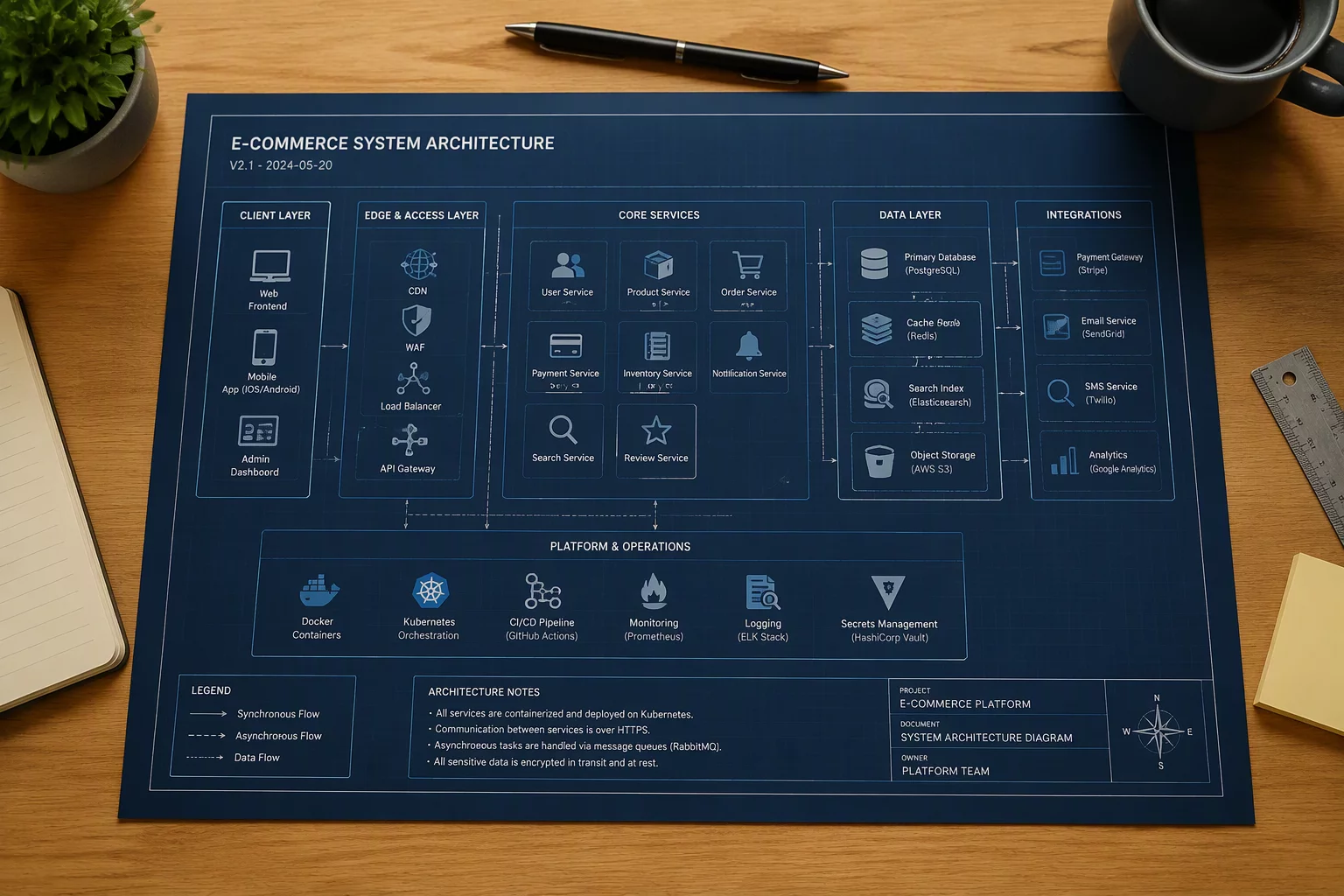
The reorganization introduced a strict asynchronous boundary dividing order intake from fulfillment execution. Instead of forcing the checkout pipeline to execute synchronous reservations against five disparate warehouse databases, the new design uses an optimistic reservation token pattern paired with a transactional outbox. The shopping cart completes instantly, publishing an immutable order intent event to the message broker.
Each domain team gained isolated database ownership. Cross-domain queries were replaced by domain-specific read projections fed exclusively through contract-verified event streams.
To prevent architectural regression, automated static analysis tests were integrated into the CI/CD pipeline. These linters immediately fail any pull request that imports domain entities outside the declared public interface. Team ownership was formalized through team-scoped API gateway routes, enabling daily independent releases without cross-team change approval boards.
Principal Enterprise Architect specializing in distributed retail architectures, domain-driven design boundary mapping, and engineering team topology optimization.
Discuss your system boundary requirements with a lead architect.