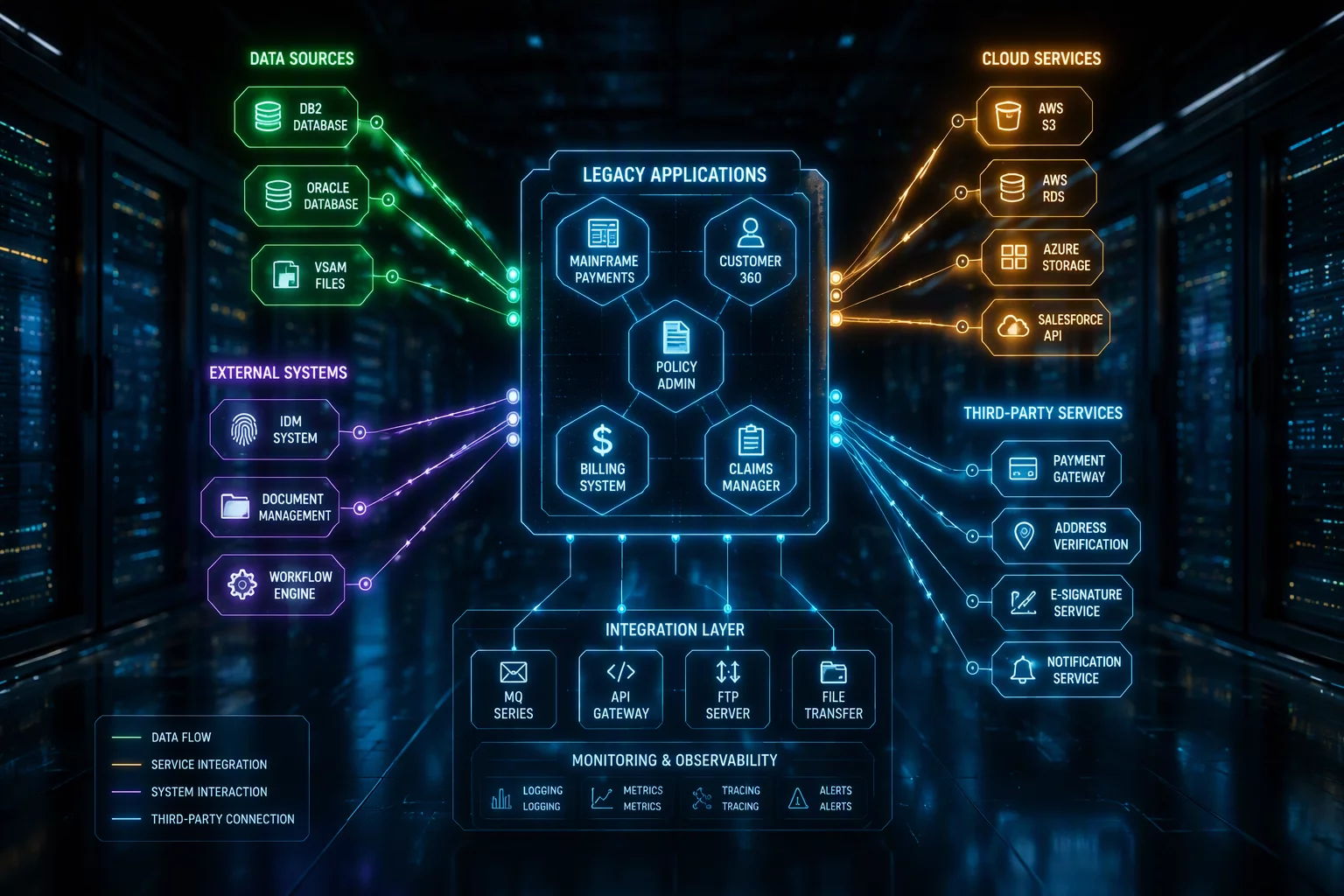
In enterprise applications that have grown over a decade, third-party integrations rarely stay contained inside clean wrapper classes. Instead, direct HTTP requests, raw database table sharing, unmanaged background queues, and forgotten webhook receivers scatter across dozens of internal packages. When planning a boundary extraction, engineering teams discover that unexpected outbound dependencies break baseline business operations the moment an internal module moves to an isolated repository.
To prevent catastrophic release failures, our architecture team implemented dynamic wire-level packet inspection paired with static call-graph decomposition. Over three weeks of continuous telemetry recording in staging and production canary clusters, we cataloged 47 distinct outbound communication lines across 12 external third-party providers. The analysis revealed that synchronous checkout flows were silently blocked by low-priority analytical telemetry and poorly throttled batch verification calls.
Isolate mission-critical business transactions from fragile third-party endpoints before beginning microservice extraction.
An external service must never share an in-memory execution thread with core database transactions. Every network boundary crossing requires a strict circuit breaker, decoupled asynchronous fallback, and explicit failure budget to prevent downstream third-party latencies from taking down the monolithic host.
After establishing an exhaustive inventory of external network dependencies, we introduced dedicated Anti-Corruption Layers (ACL) for all external protocol interactions. Rather than allowing application domain services to import raw vendor SDKs directly, we routed all outbound requests through isolated proxy boundaries with enforced schema validation and deterministic timeout guarantees.
Two vendor reporting pipelines were executing cross-schema SQL joins directly against production transactional tables without passing through application boundaries. Replacing these direct database queries with read-only event projections cut monolithic thread contention by over 40%.
The final stage involved migrating high-volume third-party sync operations to asynchronous messaging queues. By decoupling billing verification, geolocation lookup, and document rendering into event-driven background jobs, the core monolith achieved resilient availability even during extended external partner outages.
Sarah Jenkins is a Principal Systems Architect specializing in brownfield refactoring, runtime tracing, and monolith decomposition strategies.
Discuss your system boundary requirements with a lead architect.