
Boundary Analysis Memo
What Crosses This Boundary?
A systematic breakdown of payloads, temporal couplings, failure states, and hidden dependencies that flow across system and domain perimeters.
Author: Christopher Thomas
•
Published: September 18, 2026
•
Reading Time: 6 min read

Table of Contents
Navigate through the boundary breakdown sections.
Classification of Boundary Transit
Drawing a line on an architectural diagram is trivial; understanding everything that flows across that line determines whether the perimeter holds under load.
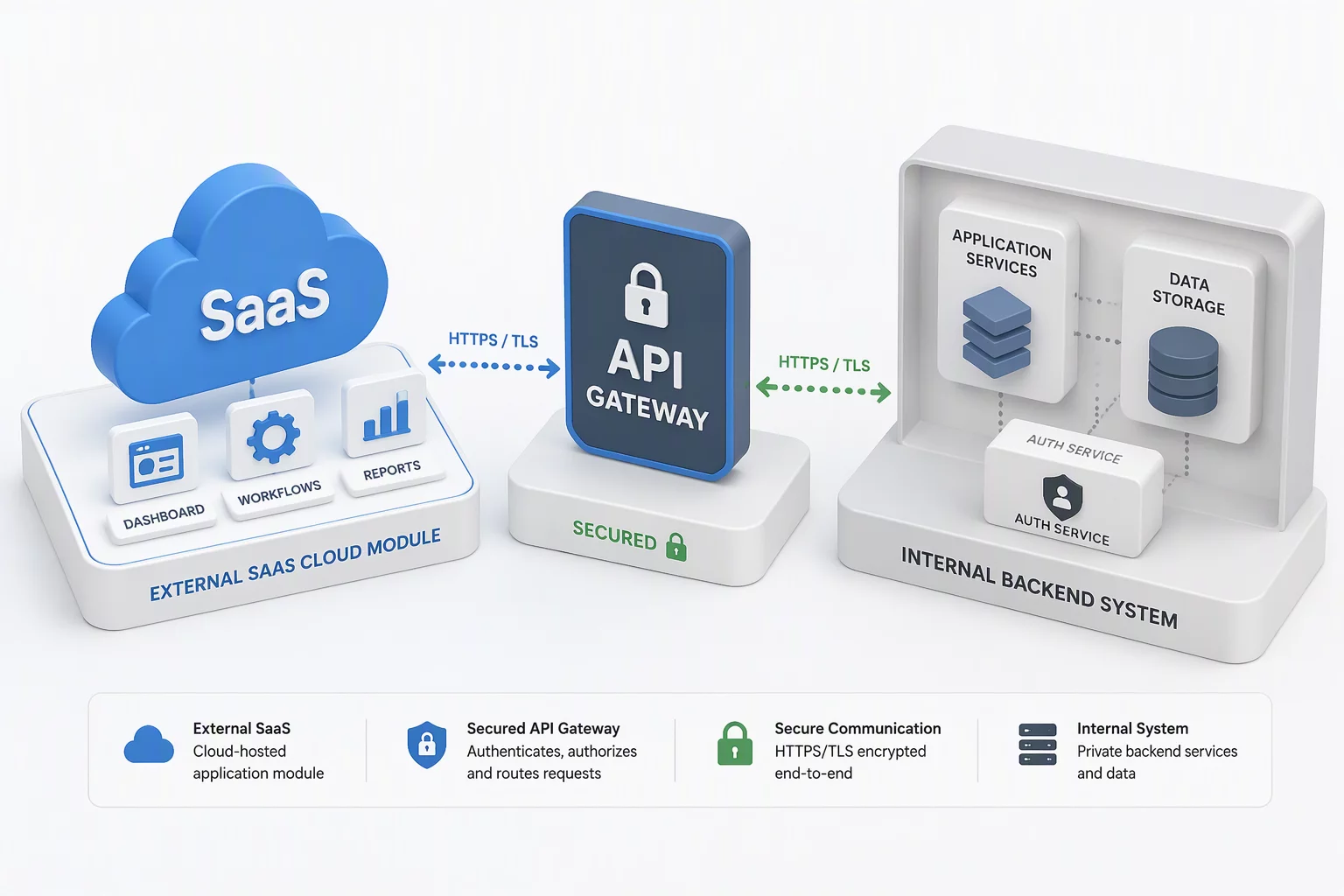
Every architectural boundary serves as an explicit contract between distinct operational domains. When engineers draft interface diagrams, they routinely document explicit synchronous request and response models. However, boundaries rarely encounter only clean, documented messages. They mediate synchronous payloads, asynchronous event streams, distributed tracing identifiers, authentication contexts, and shared cache keys.
Uninspected transit across boundary lines frequently introduces hidden coupling. When an internal entity model leaks across an API envelope, or when background retry logic forces upstream state holding, the perimeter degrades. System stability depends on classifying every transit item into structured payloads, operational metadata, or unintentional leakage.
If a state change on one side forces synchronous compensation logic on the other, the boundary is nominal rather than real.
Payloads, Side Effects, and Invariants
A complete audit of boundary crossing requires categorizing data payloads, runtime side effects, and transactional invariants.
Engineers often assume that HTTP endpoints or message queues represent the entire crossing surface. In reality, shared database connections, read replicas, common object storage buckets, and shared third-party tokens all cross boundaries invisibly without passing through interface gateways.
Primary Categories of Boundary Crossing
When mapping a system perimeter in Draw.io or formal architecture reviews, evaluate these critical vectors:
- Explicit Data Payloads: Typed schemas, protobuf contracts, and event payloads with strict versioning policies.
- Contextual Metadata: Correlation identifiers, tenant identifiers, trace headers, and authentication tokens that dictate runtime decisions.
- Failure and Backpressure Waves: Rate limit exhaustion, cascading timeout retries, circuit breaker trips, and transaction lock holding.
Key Facts & Parameters
System topology matrices and interface constraints for reference.
| Dimension / Scope Parameter | Designation / Standard |
|---|---|
| Payload Schema Governance | Strict semantic versioning with backward compatibility tests |
| Context Propagation | W3C Trace Context and signed bearer assertions only |
| Shared State Policy | Zero shared database tables; mediated via isolated event contracts |
| Blast Radius Containment | Dead-letter queues, rate limits, and fallback circuit policies |
Cross-Boundary Verification Framework
Establishing concrete audit gates prevents subtle architectural erosion over successive deployment sprints.
To verify what crosses each line, run static contract tests and dynamic dependency tracing across all active communication channels. Contract validation tools ensure that downstream teams cannot consume private fields or unpublished methods. Tracing agents confirm that requests do not bypass gateways to query internal backing stores directly.
In addition, team handoffs must define clear operational ownership for every cross-boundary asset. If an external event schema changes, the emitting domain must provide deprecation windows and translation shims. This practice isolates team roadmaps and avoids coordinated cross-team release locks.
Operational Safeguards and Checklists
Systematic techniques to document and constrain boundary traffic in daily engineering practice.
Apply strict perimeter hygiene whenever introducing new integrations, downstream subscribers, or external API consumers. The checklist below highlights mandatory reviews before promoting changes to production environments.
Implementation Checklist
- Catalog all direct and indirect data channels crossing the boundary on the official system diagram.
- Strip internal domain entity structures and expose only dedicated data transfer objects.
- Define concrete retry limits, timeout thresholds, and dead-letter isolation rules for cross-zone calls.
Fieldbook Dispatch
Subscribe to System Boundary Analysis Memos
Receive regular architectural pattern updates, scope checklists, and engineering case studies directly in your inbox.
Knowledge Base Archive
Related Boundary Studies

CT
Domain Specialist
Christopher Thomas
Christopher Thomas is a Principal Systems Architect specializing in distributed boundary design, event-driven integrations, and organizational domain modeling. He writes actionable reference guides for the BoundaryFrame Fieldbook.